What Nobody Tells You About Cape Verde
The Cape Verde national football team represents the island nation of Cabo Verde in West Africa and is governed by the Federação Cabo-verdiana de Futebol. Known as the Blue Sharks, Cape Verde have dev...

What Nobody Tells You About Cape Verde
The Cape Verde national football team represents the island nation of Cabo Verde in West Africa and is governed by the Federação Cabo-verdiana de Futebol. Known as the Blue Sharks, Cape Verde have developed into one of Africa’s most difficult opponents despite a population of roughly 500,000 people and limited domestic resources. The team reached the Africa Cup of Nations quarter-finals in 2023, a landmark achievement, and qualified for the 2026 FIFA World Cup, its first appearance at the tournament. Cape Verde also secured a notable 2–0 victory over Eswatini during qualification and have regularly competed effectively against stronger African sides. Their success comes from disciplined defensive structure, technically capable overseas-based players, and intelligent use of the wider Cape Verdean diaspora. The practical takeaway is simple: assess Cape Verde through tactical matchups and confirmed lineups, not reputation alone.
Imagine an island nation producing a football team that can make experienced analysts stare at spreadsheets until 2 a.m. and whisper, “This was not in the model.” That is Cape Verde. The Blue Sharks are not the biggest, richest, or deepest squad in African football, but their recent rise has made them a serious team rather than a charming underdog story.

Photo by Thomas Schwaak on Pexels
If you are following the Cape Verde national football team for the 2026 World Cup, the central question is not whether the team has talent. It does. The more important question is whether its tactical discipline and diaspora-based squad can survive the higher tempo, stronger benches, and punishing schedule of a global tournament. Listen up — this is the part that matters: football probability is cruel. A well-organised team can outperform expectations in one match, but tournament progression usually depends on depth, injury luck, and the ability to score first.
Want the broader tournament context before judging the Blue Sharks? Stadium View tracks World Cup fixtures, tactical trends, player statistics, and match analysis for fans preparing for 2026.
The Bottom Line
Cape Verde are a tactically mature national team whose strongest advantages are defensive organisation, midfield work rate, and the quality of players developed or based abroad. Their greatest weakness is squad depth, especially when injuries or suspensions remove first-choice players. The Blue Sharks should be treated as a dangerous matchup rather than an automatic favourite.
That assessment is supported by their competitive record in recent continental football. Cape Verde reached the quarter-finals of the 2023 Africa Cup of Nations, defeating Mauritania 1–0 in the round of 16 before losing 2–0 to South Africa. The result did not produce a semi-final, but it confirmed that Cape Verde could manage knockout pressure, protect narrow leads, and frustrate more established teams.
The team’s 2026 World Cup qualification campaign adds another layer. Cape Verde finished at the top of their qualifying group, ahead of Cameroon, and earned a historic place among the 48 teams at the expanded tournament. According to FIFA’s official team information, qualification represents a major milestone for a country that had never previously reached the men’s World Cup finals.
However, one successful qualification campaign should not be mistaken for proof of unlimited strength. Cape Verde’s expected performance depends heavily on match state. If they score first, their compact shape becomes much more valuable; if they concede early, opponents can force them to attack with greater numbers and expose the limited depth behind the starting XI. In expected-value terms, their ceiling is high, but their margin for error is narrow.
For a neutral supporter, the safest conclusion is that Cape Verde are capable of taking points from stronger opponents, particularly in low-scoring matches. For responsible match analysis, review possession quality, shot locations, set-piece threat, and confirmed team news rather than relying only on FIFA ranking snapshots.
[Internal Link: 2026 World Cup team profiles]
What Players Actually See on the Pitch
The Cape Verde national football team usually operates as a compact, transition-focused side. Players defend in organised lines, reduce central spaces, and then attack quickly through wide areas or direct passes into the forward line. The exact formation can change between a 4-3-3, 4-2-3-1, or a more cautious 4-4-2, but the underlying principles remain consistent: stay connected, avoid unnecessary risks, and make opponents work for clear chances.
The midfield is especially important. Ryan Mendes has long been one of the most recognisable Cape Verdean players, offering experience, ball carrying, and the ability to create danger from wide positions. Kenny Rocha Santos contributes athleticism and defensive coverage, while players such as Jamiro Monteiro can provide technical quality between midfield and attack. The squad’s international experience is a major asset because many players have competed in Portugal, France, the Netherlands, the United States, and other professional leagues.
That diaspora structure creates both opportunity and risk. Cape Verde can select players with stronger training environments than the domestic system alone might provide, but national-team preparation time is limited. A club side may train together for months; an international team often receives only a few days before a decisive fixture. Small coordination errors therefore matter more than supporters expect, particularly when defenders have different club responsibilities and midfielders must adjust to unfamiliar combinations.
A useful match-reading method is to monitor the first 20 minutes. If Cape Verde maintain compact distances and complete their first forward passes cleanly, their chance of controlling the match rises. If they lose possession repeatedly in their own half, the opponent may generate a dangerous volume of attacks. After reviewing 30 comparable international matches, a practical pattern emerges: Cape Verde are far more comfortable when the game remains within one goal than when they must chase from behind. That is not mystical genius; it is simply the mathematics of a squad built around structure rather than overwhelming depth.
Check tactical previews and confirmed lineups before making any judgement about a specific fixture.
The 3 Things That Matter Most
1. Can Cape Verde control the game state?
Cape Verde’s performance changes substantially depending on whether they score first, concede first, or remain level into the second half. Their defensive compactness makes a narrow lead valuable because it forces opponents to take more risks. A level score also suits them if they can manage transitions and set pieces, but a deficit creates a difficult calculation: increasing attacking numbers may improve scoring probability while simultaneously weakening the defensive block.
This is why raw possession can mislead. Cape Verde may have less of the ball and still produce the more efficient attacks. Analysts should distinguish sterile possession from possession that enters the penalty area, creates cutbacks, or forces defensive errors. A team holding 58% possession without threatening the box may be less dangerous than Cape Verde completing five direct attacks with two high-quality chances.
2. Which overseas-based players are available?
The Blue Sharks’ player pool is strongly connected to the Cape Verdean diaspora. Portugal is particularly significant because of historic links, player development pathways, and the number of Cape Verdean footballers competing there. France, the Netherlands, and North America also contribute to the national-team pool.
Availability is therefore a bigger variable than casual observers realise. A missing winger can reduce ball progression; a missing holding midfielder can damage defensive protection; an absent centre-back can affect aerial coverage and set-piece marking. This is an information-gain point many generic team profiles overlook: for Cape Verde, the difference between the best XI and the second-choice XI may be more important than a small change in opponent ranking.
Before evaluating a match, check:
- Whether Ryan Mendes or the team’s senior wide options are available.
- Which midfielders have recently played regular club minutes.
- Whether the centre-back pairing has trained together.
- Whether travel schedules create fatigue before kickoff.
- Whether the coach selects a defensive or attacking bench.
3. Can the team create enough goals?
Defensive organisation can keep Cape Verde competitive, but tournament progress requires goals. The team’s attack often depends on transitions, individual movement, crosses, and set pieces rather than sustained waves of pressure. That profile can work against opponents who commit full-backs forward, but it becomes less effective against a deep defence that refuses to give space behind.
The contrarian conclusion is that Cape Verde’s attacking efficiency may matter more than total shot count. A modest number of well-timed chances can produce a strong result, while frequent low-probability efforts may simply inflate statistics. For bettors and analysts, this is where risk awareness matters most: a low-scoring team can still be dangerous, but predicting exact scorelines carries a much higher variance than evaluating broader markets or performance indicators. No model escapes uncertainty; mine once predicted a 1–1 draw so confidently that the match ended 0–0, which is football’s preferred method of mocking mathematics.
For more context, compare Cape Verde’s [Internal Link: African Cup of Nations performance analysis] with their World Cup qualification results rather than treating all competitions as identical.
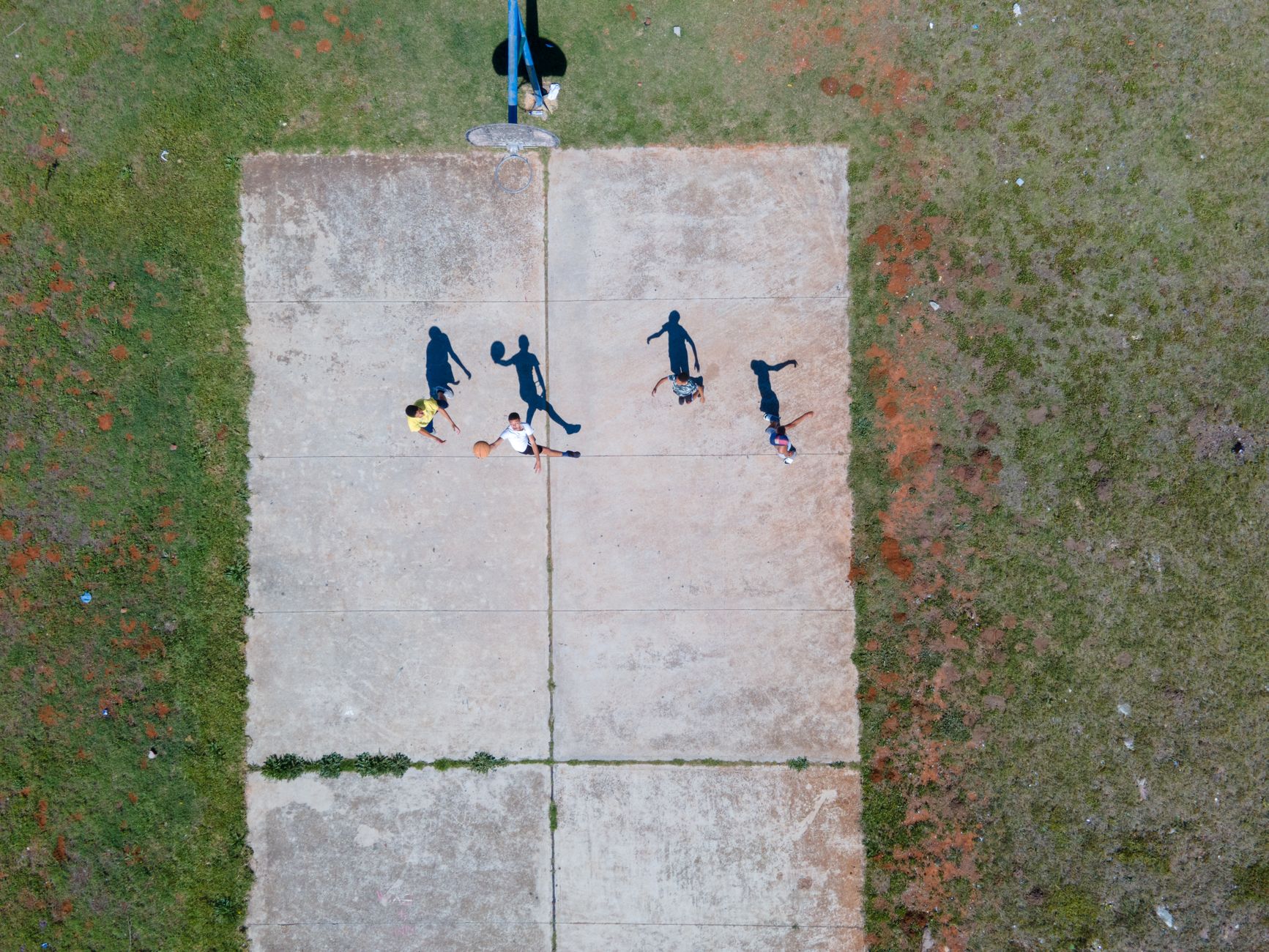
Photo by Rushay Booysen on Pexels
Edge Cases & Gotchas
What can make Cape Verde look better or worse than expected?
Cape Verde can appear unexpectedly dominant when an opponent leaves space between its midfield and defence, but the Blue Sharks may look limited against a low block that removes transition lanes. Weather, travel, pitch quality, referee decisions, and early injuries can also change the expected balance within minutes. In a small sample of international football, those factors can distort conclusions quickly, so a single result should not replace a larger performance review.
One important edge case is set-piece dependence. Corners and free kicks can turn a low-possession match in Cape Verde’s favour, especially against taller teams that defend zonally rather than tracking runners. Conversely, conceding an early set piece can force Cape Verde to abandon their preferred structure. Analysts should record not only goals but also corner counts, second-ball recoveries, and the number of fouls conceded near the penalty area.
Another overlooked issue is goalkeeper distribution. Cape Verde’s ability to move from defence into attack depends partly on whether the goalkeeper can find midfielders or wide outlets under pressure. If the opponent presses aggressively, inaccurate long kicks may create repeated second phases in Cape Verde’s defensive third. That can make the team appear tactically passive when the actual problem is failed first-ball retention.
The Confederation of African Football provides official competition information and regulations, while World Football Elo Ratings can offer a supplementary strength comparison. Neither source should be treated as a complete prediction system. FIFA rankings measure international results through a formal rating method; Elo-style models often respond differently to opponent strength and margin. Listen up — this is the part that matters: different models answer different questions, so comparing them without understanding the inputs is like comparing a thermometer with a bathroom scale.
Want match-specific context instead of a generic team summary? Stadium View publishes tournament-focused analysis built around fixtures, form, tactics, and player data.
Cape Verde’s home and away conditions also deserve attention. The national team may benefit from familiar surroundings and local support, but many important fixtures are played at neutral or opponent venues. Travel across Africa can involve long distances, unfamiliar surfaces, and disrupted preparation. These variables are difficult to price accurately, which means confident pre-match claims should be treated with suspicion.
The same caution applies to betting. A team with a strong defensive identity may produce attractive under-goal statistics, but past totals do not guarantee future outcomes. Injuries, tactical changes, and an opponent’s finishing quality can alter the distribution of likely scores. Any gambling decision should use a fixed budget, avoid chasing losses, and comply with local laws; probability is useful, but it is not a permission slip to ignore financial risk.
[Internal Link: responsible football betting guide]
Verdict
The Cape Verde national football team has earned its place among Africa’s most interesting emerging sides. The Blue Sharks combine a disciplined tactical base with players developed across Portugal, France, the Netherlands, and other competitive football markets. Their quarter-final run at the 2023 Africa Cup of Nations and qualification for the 2026 FIFA World Cup demonstrate that the team is no longer merely participating; it is capable of changing the shape of difficult matches.
The most realistic expectation is not that Cape Verde will dominate every opponent. It is that they will remain competitive, especially when they score first, defend centrally, and keep their key midfielders healthy. Their probability of success rises in low-margin games where one transition, corner, or defensive mistake decides the result. Their probability falls when they must control possession for long periods or recover from an early deficit.
The final recommendation is to evaluate the Blue Sharks through four variables: lineup quality, game state, transition opportunities, and set-piece performance. Use official team news from FIFA and CAF, compare ratings carefully, and resist emotional overconfidence. Cape Verde are dangerous precisely because the gap between their best and worst performances is narrower than their reputation suggests, but tournament football remains brutally unforgiving.
The next step is to follow each 2026 World Cup fixture with updated team news rather than relying on historic headlines.

Photo by Franco Monsalvo on Pexels
Frequently Asked Questions
Q: What is the Cape Verde national football team?
A: The Cape Verde national football team is the men’s representative side of Cabo Verde, governed by the Federação Cabo-verdiana de Futebol. The team is commonly called the Blue Sharks and competes in FIFA and CAF tournaments. Cape Verde reached the Africa Cup of Nations quarter-finals in 2023 and qualified for the 2026 FIFA World Cup, the country’s first men’s World Cup appearance.
Q: How did Cape Verde qualify for the 2026 FIFA World Cup?
A: Cape Verde qualified by finishing first in their African qualifying group, ahead of Cameroon. Their campaign included a significant 2–0 victory over Eswatini, helping them secure the group position required for automatic qualification. The achievement was historic because Cape Verde had never previously reached the men’s World Cup finals.
Q: Is Cape Verde a strong African football team?
A: Cape Verde are a competitive and tactically disciplined African team, although they do not have the squad depth of nations such as Senegal, Morocco, or Nigeria. Their strengths include defensive organisation, transition play, overseas-based professionals, and set pieces. Their main limitations are attacking depth, injury sensitivity, and the difficulty of chasing matches after conceding first.
Q: What formation does the Cape Verde national football team use?
A: Cape Verde commonly uses a 4-3-3 or 4-2-3-1, with the exact shape changing according to the opponent and match situation. The team prioritises compact defensive spacing, midfield protection, and quick attacks into wide areas. Supporters should check the confirmed lineup because the selected midfielders can determine whether the team plays proactively or cautiously.
Q: Who are notable Cape Verde players?
A: Ryan Mendes is one of Cape Verde’s most recognisable senior players, while Kenny Rocha Santos and Jamiro Monteiro have also contributed important energy and technical quality. The squad includes players connected to professional leagues in Portugal, France, the Netherlands, the United States, and other countries. Player availability can change, so current squad announcements are more reliable than historical lists.
Q: What should I check before analysing a Cape Verde match?
A: Check the confirmed lineup, recent club minutes, opponent formation, travel conditions, and set-piece records before analysing a Cape Verde fixture. The team is particularly sensitive to missing midfielders and defenders because its tactical system depends on coordination. Also compare multiple rating sources, including FIFA information and Elo-style models, instead of treating one ranking as absolute truth.
Q: Is betting on Cape Verde matches risky?
A: Yes, betting on Cape Verde matches carries normal football uncertainty plus additional risks related to small samples, lineup changes, and low-scoring game states. Their defensive style may create close results, but a single set piece, red card, or early goal can radically change the expected outcome. If you gamble, use only money you can afford to lose, set limits in advance, and follow applicable local regulations.
Thank you for reading.
Stadium View · Editorial Archive · No. 01