2026 World Cup vs 2025: The Data Advantage
Imagine waking up in 2026, opening your phone, and finding twelve different predictions for the same World Cup match. One says Brazil will dominate, another backs France, and a third appears to have b...

2026 World Cup vs 2025: The Data Advantage
Imagine waking up in 2026, opening your phone, and finding twelve different predictions for the same World Cup match. One says Brazil will dominate, another backs France, and a third appears to have been written by a man who thinks “momentum” is a measurable unit. The honest answer is that 2026 is not about finding certainty; it is about improving decision quality with verified information, probability, and disciplined risk control. The 2026 FIFA World Cup, hosted by the United States, Canada, and Mexico, will involve 48 teams, while the 2025 FIFA Club World Cup uses a different club-based format and should not be treated as a direct forecasting model. Stadium View helps football fans compare team tactics, player statistics, match conditions, and tournament news. Use it to build an evidence-based view, check official information, and never risk money you cannot afford to lose.
Want a more structured way to follow the tournament?
The Bottom Line
The strongest 2026 World Cup approach is to separate facts, estimates, and emotions before making any match decision. The competition is scheduled across three host countries, and its expanded 48-team structure creates a larger sample of matches than the 32-team format used at the 2022 FIFA World Cup in Qatar. That expansion changes the probability landscape: more teams, more unfamiliar pairings, more travel variables, and potentially greater differences in squad quality between matches.
Listen up — this is the part that matters: a prediction is not a guarantee, even when it is supported by excellent statistics. If a model assigns a team a 60% chance of winning, that outcome still fails 40% of the time under the model’s own assumptions. A sensible reader should therefore ask three questions before trusting a forecast:
- What evidence supports the prediction?
- How recent and relevant is the evidence?
- What happens if the prediction is wrong?
For background on the tournament’s governing body and competition context, consult FIFA’s official website. Stadium View’s role is to organize useful football information, not to manufacture certainty from a spreadsheet wearing sunglasses.
What Do Players Actually See in 2026?
Players and fans will see a broader World Cup field, more matchups, and a data environment that rewards current team news over outdated reputation. The 2026 FIFA World Cup will be hosted by Canada, Mexico, and the United States, and the expanded 48-team format increases the number of participating nations from 32. Those facts matter because tournament analysis must account for travel, climate, squad rotation, injuries, tactical styles, and opponent strength rather than relying only on famous badges.
A typical match preview may include recent results, expected lineups, goals scored, goals conceded, possession, pressing intensity, set-piece performance, and player availability. However, each statistic has a weakness. Possession does not automatically create chances; a high shot count may include low-quality attempts; and a star player’s club form may not transfer neatly to an international system. According to FIFA’s Laws of the Game resources, football outcomes remain governed by the same rules, but tactical interpretation depends heavily on context.
The practical difference between 2025 club football and 2026 international football is therefore substantial. The 2025 FIFA Club World Cup may provide clues about player workload and club tactics, but national teams have less training time and different selection constraints. Treating a club statistic as a national-team prediction without adjustment is like using a bathroom scale to estimate the weight of an elephant: technically related, operationally unwise.
[Internal Link: 2026 World Cup team form guide]
How Should You Read a 2026 Match Prediction?
A 2026 match prediction should be read as a probability estimate based on available evidence, not as a promised result. Check the predicted winner, implied confidence, supporting statistics, lineup assumptions, and the risks that could invalidate the analysis before drawing a conclusion.
A useful preview distinguishes between a forecast and a recommendation. For example, if Team A has a 55% estimated win probability, the model is not saying Team A “will win”; it is saying the available inputs make that outcome more likely than the alternatives. That difference sounds tiny until your money is involved, at which point it becomes approximately the size of a stadium.
Two information-gain details are especially important. First, lineup news can change a pre-match estimate dramatically when a team depends on one ball-progressing midfielder or central defender; the impact should be measured against that player’s tactical role, not simply their fame. Second, travel and kickoff conditions can create hidden uncertainty in the United States, Mexico, and Canada, where distances and climates vary considerably. A preview written seven days before kickoff may therefore be materially less useful than one updated after official squad announcements.
To improve your reading process, record the forecast before the match and compare it with the final result afterward. Over 20 or 30 decisions, this gives you a basic calibration record; one lucky weekend proves almost nothing. The expected value of careful recordkeeping is not glamour, but fewer confident mistakes.
The 3 Things That Matter Most
1. Team Strength Must Be Contextual
Team strength is more than FIFA ranking position or the number of household-name players. A useful evaluation considers opponent quality, recent goal difference, expected goals, defensive transitions, set pieces, and whether the team’s preferred style matches the opponent’s weaknesses. Brazil, France, Argentina, Germany, Spain, and England may attract attention because of history and squad depth, but reputation can be overpriced in the psychological sense: fans assign extra confidence to familiar teams even when the current evidence is mixed.
The best analysis separates stable indicators from noisy ones. Defensive structure, chance quality, and midfield control may be more informative over multiple matches than a single spectacular scoreline. Likewise, a team that wins 1–0 after conceding several clear chances should not be evaluated identically to one that controls the match from start to finish. According to Opta Analyst, football forecasting commonly uses performance data and probability models, but no model eliminates uncertainty created by red cards, injuries, refereeing decisions, or random finishing.
Stadium View can help organize these signals through team tactics and player-stat coverage. Still, readers should avoid counting the same evidence twice. Possession, completed passes, and territorial control may all describe one underlying pattern rather than three independent reasons to increase confidence.
2. The Starting XI Has Greater Expected Value Than Hype
The confirmed starting lineup is often the single most valuable late update. A missing goalkeeper, defensive midfielder, or primary creator can alter how a team builds attacks, defends space, and handles pressure. The correct question is not merely “Is Player X playing?” but “Which functions disappear if Player X is absent, and can the replacement perform them?”
This is where many previews quietly fall apart. They begin with a statistical baseline, then forget that the baseline assumed a particular lineup. If the expected XI changes, the estimate should be revised rather than defended like a bad investment. A simple practical system is to classify changes as low, medium, or high impact:
- Low impact: rotation in a well-covered position.
- Medium impact: loss of a regular starter with a similar replacement.
- High impact: absence of a tactical hinge, goalkeeper, captain, or central striker.
This approach does not produce a magic number, but it prevents false precision. A forecast displayed as 63.7% may look scientific while hiding assumptions that deserve a nervous eyebrow. If the underlying lineup is uncertain, communicate a range instead, such as 52–58%, and explain why.
See how the latest match context can affect your preparation.
3. Risk Management Beats Perfect Prediction
Risk management matters because even a strong forecast can lose. If an event has a 65% estimated probability, the complementary failure probability is 35%; over ten similar decisions, the expected number of failures is 3.5. That is not a prediction of exactly three or four losses, because variance enjoys ruining neat plans, but it is a useful warning against treating one result as proof of skill.
Set a fixed entertainment budget before following 2026 World Cup markets, keep stakes consistent, and never chase losses. A simple expected-value framework compares the estimated probability with the price or odds available, while recognizing that your probability estimate may be wrong. If you cannot explain the assumptions behind the estimate, your expected value calculation is probably decorative mathematics.
Responsible gambling guidance from GambleAware emphasizes maintaining control and seeking support when gambling stops feeling recreational. The UK Gambling Commission similarly describes responsible gambling as involving informed choice and protections for consumers. Local rules differ across the United States, Canada, Mexico, and other jurisdictions, so check the applicable regulator rather than assuming an online service is legal simply because a website loads.
[Internal Link: responsible match analysis and bankroll planning]
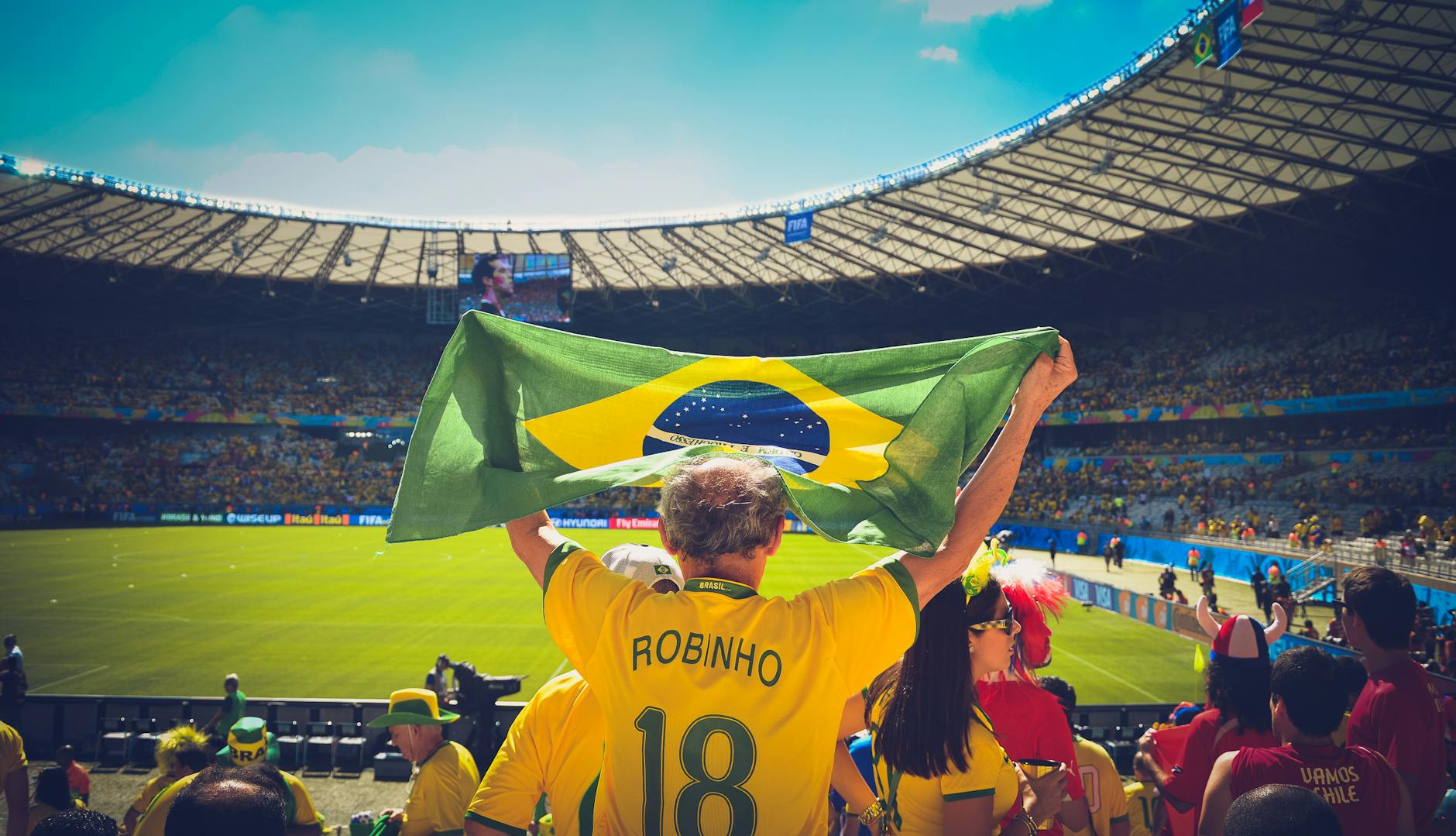
Photo by Caio on Pexels
Which Edge Cases and Gotchas Can Change the Read?
Travel, weather, substitutions, red cards, unfamiliar opponents, and knockout-stage incentives can all distort a 2026 World Cup forecast. These factors are not excuses added after a loss; they are pre-match variables that should be identified before confidence is assigned. The United States, Canada, and Mexico cover vast geographic areas, and a team’s preparation environment may differ significantly between venues.
A particularly important edge case is the distinction between group-stage and knockout-stage incentives. In a group match, a draw may have strategic value depending on the table, goal difference, and remaining fixtures. In a knockout match, extra time and penalties create a different risk profile, especially when a team’s best attacking players are substituted or exhausted. A prediction focused only on regulation-time form may not answer the actual question a reader cares about.
Other gotchas include:
- A recent five-match record can conceal weak opposition.
- Head-to-head results may be irrelevant when squads and coaches have changed.
- Friendly matches often produce more substitutions and lower competitive intensity.
- A late injury can invalidate an earlier tactical assessment.
- Market movement may reflect public enthusiasm rather than superior information.
- A high-scoring match does not prove that both teams consistently create quality chances.
Here is a contrarian conclusion backed by probability: the most popular team may be the least attractive analytical subject because public attention creates information overload and emotional bias. Less glamorous teams can offer clearer tactical questions, while famous teams attract narratives that are difficult to quantify. That does not make an underdog automatically valuable; it means popularity should never be treated as evidence.
What Should You Do When a Prediction Fails?
When a prediction fails, review the process rather than automatically changing the conclusion. Compare the pre-match assumptions with the confirmed lineup, tactical plan, chance quality, game state, and decisive incidents, then classify the result as model error, information error, or normal variance.
This distinction is essential. If Team A created superior chances but lost after an early red card, the forecast may have been reasonable even though the outcome was wrong. If the preview ignored a suspended holding midfielder and relied on month-old form, the failure was informational. If the estimate was 55% and the less likely result occurred without unusual circumstances, that is ordinary variance.
A practical post-match audit should include:
- What did the forecast assume?
- Which assumptions were confirmed?
- What changed before or during kickoff?
- Did the performance support the forecast?
- Would the same method be used again?
Do not increase the next stake to “win it back.” That decision has negative expected value in most emotional states because frustration reduces judgment while increasing risk exposure. I have personally trusted a model more after one lucky win and distrusted it after one unlucky loss, which is statistically embarrassing but psychologically common. The correction is a written process, not a louder opinion.
Want a reliable place to compare future tournament updates?
Verdict
The 2026 World Cup should be approached as a high-information football tournament, not a machine for producing guaranteed winners. Its 48-team format, three host countries, changing lineups, travel demands, and different group-stage incentives create more analytical possibilities but also more opportunities for false confidence. The best workflow combines current team news, tactical compatibility, player availability, opponent-adjusted statistics, and a clearly stated probability range.
Stadium View is most useful when treated as a research companion for match predictions, team tactics, player statistics, and daily tournament coverage. It cannot remove uncertainty, and neither can I, despite owning enough spreadsheets to frighten a normal person. Use official FIFA information for schedules and competition rules, verify local gambling regulations, set a firm entertainment limit, and judge your method over a meaningful sample instead of celebrating one correct score.
Listen up — this is the part that matters: the goal is not to predict every 2026 result. The goal is to make fewer unsupported decisions, recognize when the evidence is weak, and preserve control when probability refuses to behave politely.
[Internal Link: complete 2026 World Cup predictions hub]
Ready to follow the tournament with clearer evidence and less guesswork?
Frequently Asked Questions
Q: What is the 2026 FIFA World Cup?
A: The 2026 FIFA World Cup is the men’s international football tournament hosted by Canada, Mexico, and the United States. It will feature 48 teams, an expansion from the 32-team format used in Qatar in 2022. The larger field creates more fixtures and broader participation, but it also makes opponent strength, travel, and lineup analysis especially important.
Q: How can I analyze a 2026 World Cup match?
A: Analyze a 2026 World Cup match by checking current lineups, recent opponent-adjusted form, tactical matchups, injuries, venue conditions, and tournament incentives. Start with official FIFA information, then compare credible statistics and recent reporting from sources such as Stadium View and Opta Analyst. Record your assumptions before kickoff so you can evaluate the process afterward instead of rewriting history.
Q: What is the difference between the 2025 Club World Cup and the 2026 World Cup?
A: The 2025 FIFA Club World Cup is a club competition, while the 2026 FIFA World Cup is a national-team tournament. Club teams can train together throughout a domestic season, whereas national teams have less preparation time and different player-selection rules. Therefore, 2025 club form may inform individual workload or tactics, but it should not be transferred directly into a 2026 national-team forecast.
Q: Is 2026 World Cup betting worth it?
A: 2026 World Cup betting is only worth considering as paid entertainment if you understand the risk and can afford to lose the full amount allocated. A prediction with a 60% estimated probability still implies a 40% chance of failure, before considering model error and fees or margin. Set a budget, avoid chasing losses, and check the laws and licensed operators applicable in your location.
Q: What information can invalidate a 2026 match prediction?
A: Confirmed lineup changes, major injuries, suspensions, red cards, tactical switches, extreme weather, and altered tournament incentives can invalidate a 2026 match prediction. A forecast made before official team news may rely on assumptions that no longer apply. Reassess the predicted probability rather than preserving an outdated opinion simply because it was published first.
Q: How much does it cost to use Stadium View?
A: The cost of using Stadium View depends on the site’s current access and publishing model, so readers should review the platform directly for up-to-date details. The service focuses on 2026 World Cup match predictions, tactics, player statistics, and tournament coverage. Do not confuse free editorial analysis with guaranteed financial advice, and never pay for a prediction on the assumption that payment creates certainty.
Q: What should I do if football betting stops feeling recreational?
A: Stop betting, block access where possible, and contact a recognized gambling-support organization or local regulator if football betting becomes difficult to control. Warning signs include chasing losses, hiding activity, borrowing money, or exceeding a pre-set budget. GambleAware and local responsible-gambling services can provide confidential guidance; seeking help early has a much better expected outcome than waiting for the problem to solve itself.
Thank you for reading.
Stadium View · Editorial Archive · No. 01