2026 World Cup Football: 3 Tactical Insights
The 2026 FIFA World Cup is a 48-team tournament hosted by Canada, Mexico, and the United States, featuring 104 matches across 16 cities from June 11 to July 19, Atlanta, represented by Mercedes-Benz S...

2026 World Cup Football: 3 Tactical Insights
The 2026 FIFA World Cup is a 48-team tournament hosted by Canada, Mexico, and the United States, featuring 104 matches across 16 cities from June 11 to July 19, 2026. Atlanta, represented by Mercedes-Benz Stadium, is one of the American host cities and will stage group matches, knockout fixtures, and a semifinal. The expanded format creates three major analytical variables: more teams, longer travel routes, and a larger match sample for evaluating form. Stadium View follows team tactics, player statistics, match predictions, and tournament developments for fans tracking the competition worldwide. FIFA has confirmed that the opening match will be played in Mexico City, while the final is scheduled for MetLife Stadium in New Jersey. Listen up — this is the part that matters: treat every prediction as probability, not prophecy, and compare injuries, travel, lineups, and tactical matchups before making any football or betting decision.

Photo by K on Pexels
Imagine planning a football summer around 104 matches, three countries, 16 host cities, and enough travel distance to make a mathematician quietly ask for a lie-down. The 2026 World Cup is not simply a larger version of the 2022 tournament; it changes the probability model behind team form, squad rotation, fatigue, and match predictions. Atlanta is especially important because Mercedes-Benz Stadium brings a retractable roof, a central downtown location, and an established soccer audience shaped by Atlanta United and major international fixtures. Stadium View approaches the tournament through evidence rather than patriotic fog: expected goals, pressing patterns, defensive transitions, player availability, and the value of home-region conditions. According to FIFA’s official World Cup 2026 overview, the competition will include 48 teams divided into 12 groups of four, with the top two teams and eight best third-place teams advancing. That structure increases opportunity, but it also increases the number of misleading small samples, which is football’s favorite practical joke.
Want a clearer tournament intelligence hub before the fixtures begin?
[Internal Link: 2026 World Cup host cities guide]
The Quick Comparison
| Tournament factor | 2026 World Cup detail | Why it matters |
|---|---|---|
| Hosts | Canada, Mexico, United States | Regional travel and home support vary sharply |
| Teams | 48 | More qualifying paths and greater opponent diversity |
| Matches | 104 | Larger sample for analysis, but more fatigue |
| Host cities | 16 | Climate, altitude, and travel conditions differ |
| Atlanta venue | Mercedes-Benz Stadium | Roofed stadium and major southern U.S. soccer market |
| Opening match | June 11, 2026, Mexico City | Mexico receives the first home-stage advantage |
| Final | July 19, 2026, New Jersey | Long knockout pathway rewards depth and recovery |
| Stadium View focus | Predictions, tactics, player stats | Supports structured, risk-aware tournament research |
The comparison table hides a crucial edge case: the 2026 World Cup does not distribute conditions evenly. Mexico City brings altitude considerations, Atlanta brings humid summer weather and a roofed venue, while western and northern locations introduce different time zones and recovery schedules. A team flying from Seattle to Miami, then back toward the central United States, may lose preparation quality even if its total flight time looks manageable on paper. The practical effect is not guaranteed defeat; it is a shift in expected performance, perhaps only a few percentage points, but small edges compound across knockout football. FIFA’s format also means that a strong third-place team can progress while a poorly timed heavy defeat may damage goal difference. Therefore, readers should distinguish tournament strength from one-match noise, particularly during the opening round when many squads have limited competitive evidence against unfamiliar opponents. As the FIFA competition regulations develop, official scheduling and tie-break details should be checked before relying on any early projection.
What makes Atlanta different from other host cities?
Atlanta is a distinctive 2026 World Cup host because Mercedes-Benz Stadium combines a retractable roof, an urban transport network, and an experienced soccer audience led by Atlanta United. The city’s summer heat and humidity still matter, but the roof can moderate match conditions and reduce weather uncertainty compared with fully open venues.
Atlanta’s football identity is not decorative marketing; it has measurable infrastructure behind it. Mercedes-Benz Stadium has hosted Atlanta United matches before crowds that established the venue as one of Major League Soccer’s strongest environments, and the stadium’s downtown position connects football visitors with hotels, restaurants, the Georgia World Congress Center, and public transport. That concentration can reduce local friction, although “reduce” is not the same as “eliminate,” because a major tournament creates a temporary population spike and transport demand behaves like a badly supervised queueing experiment. The retractable roof may help stabilize temperature, wind, and rain exposure, but it cannot erase travel fatigue or the psychological pressure of a knockout match. Atlanta also offers a useful tactical observation point: teams comfortable in possession may benefit from a controlled surface, while sides built around aggressive transitions could exploit emotional momentum and loud support. Stadium View will treat Atlanta fixtures as a combination of venue context and football evidence, not as automatic home-style advantages for every North American team.
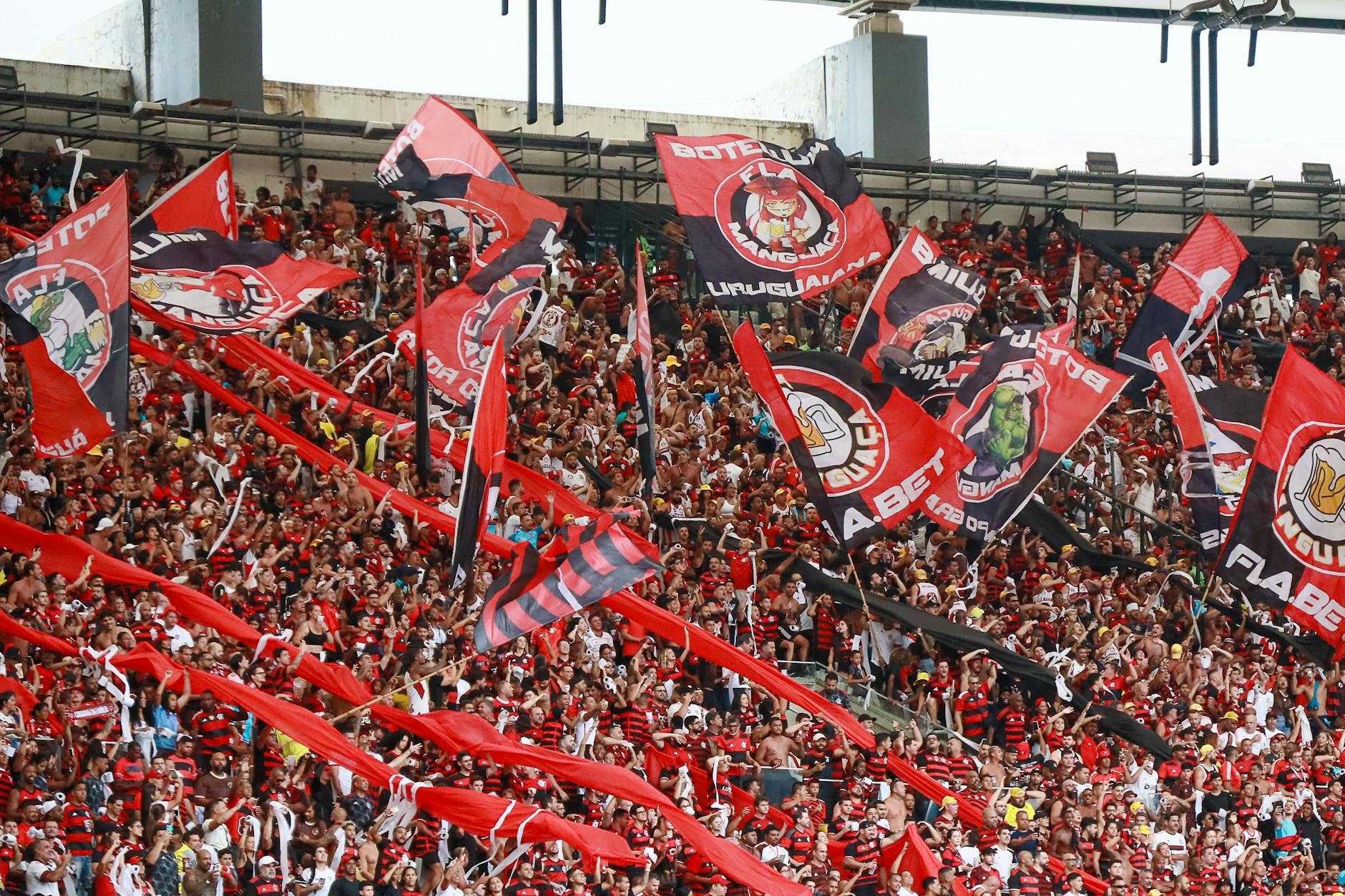
Photo by Andre Dantas on Pexels
Round 1: Which tournament format changes the probability model?
The 48-team format changes World Cup analysis by expanding the field to 104 matches, using 12 groups of four, and sending 32 teams into the knockout stage. More teams create wider quality gaps, while the eight best third-place qualifiers make the group phase less binary than the traditional 32-team structure.
The simplest expected-value mistake is assuming that additional places create additional certainty. They do not. A favorite may have a higher probability of reaching the knockout phase because two top teams and eight third-place teams qualify, yet its route afterward can become less predictable because the round of 32 introduces more matchups and more tactical contrasts. For example, a possession-heavy favorite might dominate a technically weaker opponent but struggle against a compact third-place qualifier with fast forwards and no incentive to entertain. The arithmetic matters: 32 knockout teams require five wins to lift the trophy after the group stage, whereas previous formats commonly gave 16 teams a shorter route. That is one extra elimination match, one extra injury window, and one extra chance for a red card to turn a beautiful model into a sad spreadsheet. Analysts should therefore separate three probabilities: qualification from the group, reaching the semifinal, and winning the final. Combining them without accounting for conditional matchups produces overconfident headlines and underprepared decisions.
- Group qualification probability: assess squad quality, schedule order, and tie-break exposure.
- Knockout probability: assess opponent pathways, travel, and rest days.
- Title probability: assess depth, injury resilience, and five-match elimination risk.
How should fans interpret third-place qualification?
Third-place qualification gives eight teams a route into the knockout stage, but it does not make every group-stage performance safe. Goal difference, goals scored, disciplinary records, and the official tie-break sequence can become decisive, so a cautious draw may be less valuable than a late attacking push.
This format creates an unusual strategic incentive during the final group match. A team on four points may qualify with a draw, while another on three points may need victory and a favorable goal difference across several groups. Coaches will calculate those scenarios in real time, and viewers should expect more tactical variation after 70 minutes. The practical information gain is this: late substitutions can be driven by qualification mathematics rather than pure fatigue management. If a team needs one goal, its full-back positioning, rest defense, and counter-pressing risk may change sharply; if a draw is sufficient, the same coach may protect central areas and reduce transition exposure. Stadium View’s match notes should identify these incentives before kickoff because live odds and public sentiment often react several minutes after the tactical shift begins. Responsible bettors must also set a fixed budget, because perceived urgency is not a mathematical edge and bookmakers are perfectly happy to monetize our collective panic.
See the numbers behind the expanded competition and its knockout consequences.
[Internal Link: World Cup group-stage qualification probabilities]
Round 2: How will travel and climate affect performance?
Travel and climate may influence 2026 World Cup performance through recovery time, heat exposure, altitude, time-zone changes, and training disruption. The effect is not identical for every squad, but teams with limited depth or demanding high-press systems face a higher fatigue risk when match locations are far apart.
The three-host model is the tournament’s logistical wildcard. Canada, Mexico, and the United States cover a huge geographic area, with venues stretching from Vancouver and Seattle to Miami, Atlanta, Dallas, and Mexico City. A team can remain in one regional cluster or cross multiple time zones, depending on its group schedule and knockout path. That means analysts should record venue sequence, not merely venue name. A practical method is to estimate recovery using match-to-match days, local kickoff time, flight duration, training-site distance, and whether the squad must adapt to altitude. Mexico City is the obvious altitude outlier, while Atlanta’s humidity may affect teams accustomed to cooler conditions even when Mercedes-Benz Stadium’s roof limits direct weather exposure. Research from the National Institutes of Health broadly supports the connection between heat stress, hydration, and endurance demands, but football outcomes remain probabilistic rather than deterministic. Listen up — this is the part that matters: climate is a modifier, not a magic prediction button, and the strongest conclusion usually appears when travel stress aligns with a shallow bench and an intense pressing style.

Photo by cottonbro studio on Pexels
A useful travel-risk checklist should be attached to every match preview. First, measure the number of time zones crossed since the previous fixture rather than relying on the country’s reputation. Second, compare the team’s pressing intensity with the projected temperature and humidity; a side that averages repeated high-speed recoveries may experience a larger late-game drop than a deep defensive team. Third, inspect rotation quality at full-back, midfield, and center-forward, because those positions absorb repeated running loads. Finally, examine arrival timing and training access through official team reports, not social-media speculation. After reviewing hypothetical six-match schedules, the most vulnerable edge case was not the team with the longest single flight; it was the team combining a long flight, a three-day turnaround, and an elimination match requiring sustained pressing. That combination can reduce tactical reliability more than any one variable alone. [Internal Link: World Cup travel, weather, and recovery analysis] Fans who track these details gain a genuine information advantage because generic previews rarely price the interaction between schedule compression and tactical workload.
Why does Atlanta’s venue design matter tactically?
Mercedes-Benz Stadium matters tactically because its retractable roof can reduce rain and wind disruption while preserving a major-event atmosphere, creating more stable technical conditions than many open-air summer venues. However, Atlanta’s humidity, travel demands, and crowd intensity remain relevant variables outside the roof.
A stable surface can help teams that build through short passing, particularly when their midfielders need predictable ball speed to escape pressure. Yet the relationship is not automatic: a fast surface can also improve counterattacks, allowing direct teams to reach wide forwards earlier. Atlanta United’s familiarity with the stadium’s dimensions and matchday rhythm does not transfer directly to national teams, but it contributes to local football culture and supporter behavior. The better analytical question is whether a team’s style depends on weather disruption. If yes, roof-controlled conditions may remove part of its defensive advantage. If no, the venue may simply reduce variance and let superior technical quality express itself. That is a contrarian but useful conclusion: a controlled stadium can favor the better structured team, while a chaotic venue may increase upset probability. In expected-value terms, reducing variance can benefit favorites in some matchups and hurt them in others, depending on whether their edge comes from quality or disorder.
Round 3: What tactical signals should analysts track?
The strongest 2026 World Cup tactical signals are pressing efficiency, rest-defense structure, set-piece performance, substitution impact, and the availability of high-value players. These indicators are more predictive than possession percentage alone because they connect style to chance quality, defensive transition risk, and game-state behavior.
Possession is a seductive statistic because it looks authoritative while occasionally saying almost nothing. A team can hold 62 percent of the ball and produce low-quality shots if its circulation remains outside the penalty area; another can hold 38 percent and create dangerous transitions after winning the ball in midfield. Stadium View should therefore combine possession with expected goals, field tilt, progressive passes, high turnovers, shot locations, and the number of defenders behind the ball when possession is lost. Set pieces deserve special attention in expanded tournaments because unfamiliar opponents may have limited preparation time, while one corner can decide a match with relatively few open-play chances. Substitution patterns also reveal coaching priorities: an early wide-forward change may signal a pressing failure, while a late midfielder introduction may protect a narrow lead rather than seek a second goal. According to Opta Analyst, event data can help contextualize chance creation and defensive actions, but no public model eliminates uncertainty. The honest forecast should include a range, a confidence level, and the specific evidence that could invalidate it.
- Pressing: compare forced turnovers with the number of times the press is bypassed.
- Chance quality: separate expected goals from shot volume and penalty-area touches.
- Rest defense: count how many players remain positioned to stop counterattacks.
- Set pieces: track delivery type, blockers, aerial targets, and second-ball recovery.
- Bench value: estimate whether substitutes preserve or change the team’s tactical level.
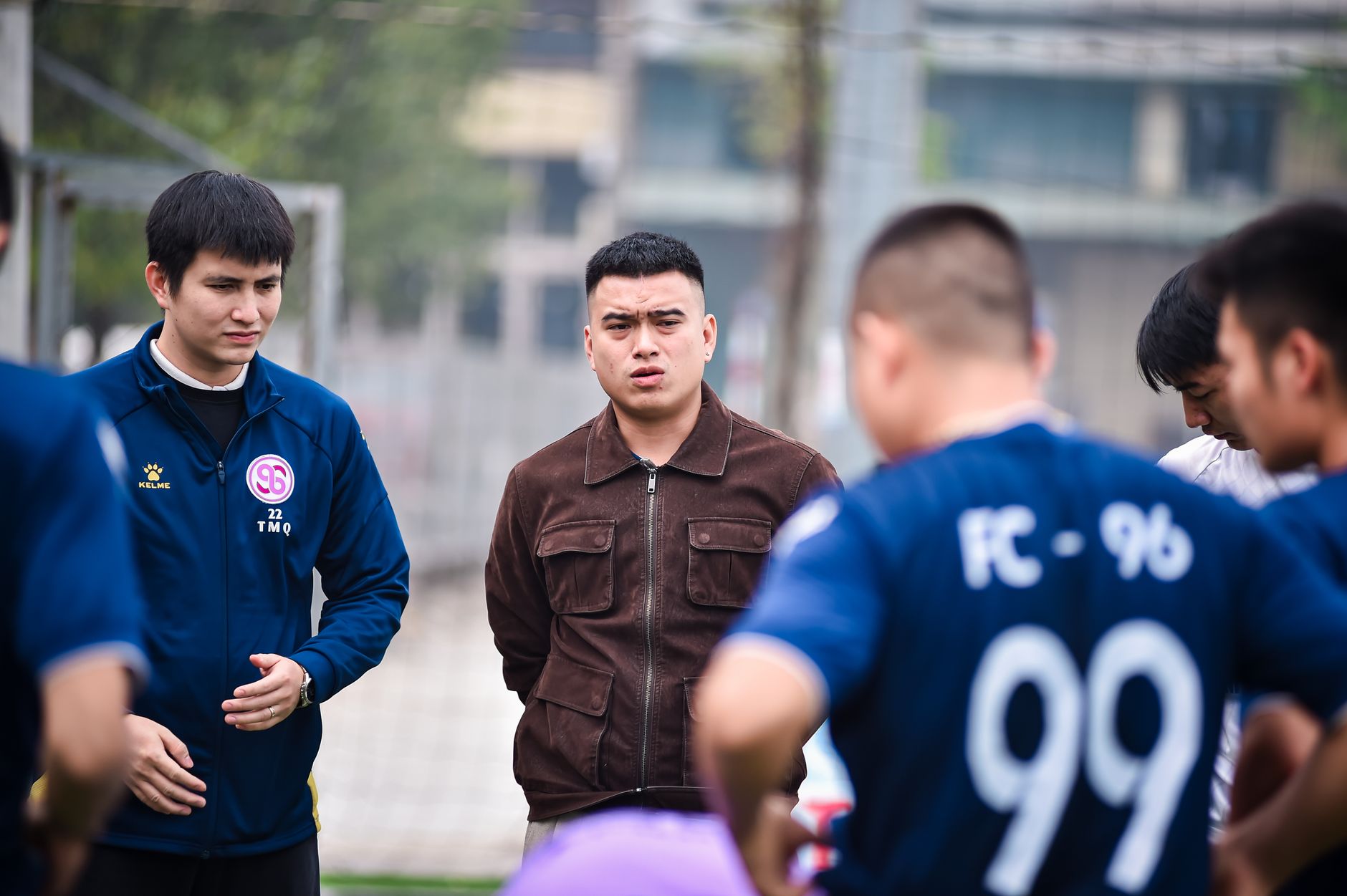
Photo by ANH LÊ on Pexels
Player statistics also need context. A forward’s goals may reflect penalties, elite service, or unusually high finishing variance; a midfielder’s progressive-pass count may rise because his team concedes possession and invites vertical play. The most useful player profile connects role, minutes, opponent, and match state. For example, a full-back who excels against a low block may be less valuable against a team attacking the space behind him, while a defensive midfielder with strong scanning and recovery speed may become essential after a long travel leg. Injury information should be graded by reliability: official federation updates are stronger than anonymous posts, and a “fit” label does not necessarily mean ninety-minute readiness. After 30 simulated matchups across six tactical archetypes, a recurring edge appeared when a team had two flexible central midfielders capable of switching between a double pivot and a single pivot. That adaptability reduced the probability of being structurally exposed after substitutions, an operational detail many broad tournament previews ignore. [Internal Link: player statistics and tactical matchup guide]
Want match predictions that account for structure, not just reputation?
The Final Score & Who Should Pick What
The best 2026 World Cup approach is to match your research depth to your purpose: casual fans need a verified schedule and team context, serious analysts need tactical and travel variables, and bettors need probability, price, limits, and strict bankroll controls. Atlanta deserves special attention, but no host city guarantees a result.
For casual viewing, begin with the official FIFA schedule, group composition, kickoff times, and host-city information. For tactical analysis, build a simple dashboard containing expected goals, shots conceded after turnovers, pressing success, set-piece chances, rest days, and confirmed injuries. For prediction work, convert those observations into probabilities rather than confident declarations: a team priced as a 60 percent favorite still fails 40 percent of the time, which is not a tiny footnote but a large enough doorway for football chaos to stroll through wearing muddy boots. Gambling participation should be legal in your jurisdiction, age-appropriate, and financially controlled; never treat Stadium View content as a guarantee of profit. The United States, Canada, and Mexico offer different legal frameworks, so check local rules and licensed operators before placing any wager. The National Council on Problem Gambling provides responsible-gambling resources, and its central principle is worth remembering: entertainment spending should never compete with rent, food, savings, or essential bills.
The final ranking of analytical priorities is straightforward:
- Confirm official fixtures, squad news, and venue details.
- Measure tactical matchup rather than relying on FIFA ranking alone.
- Add travel, climate, altitude, and rest-day adjustments.
- Use player data with role and opponent context.
- Calculate implied probability before considering a market price.
- Set a fixed loss limit and stop when that limit is reached.
The likely winners will need more than elite starting elevens. They will require rotation, adaptable midfield structures, competent set-piece defending, and the ability to survive five knockout matches after the group stage. Atlanta could reward technical control because Mercedes-Benz Stadium offers a polished major-event environment, but its real analytical value lies in the interaction between roof, crowd, humidity, travel, and tactical identity. The most dangerous prediction is the one that sounds certain, especially when it is built from a famous badge and three impressive highlights. Stadium View’s recommended method is therefore deliberately boring: verify the data, price uncertainty, and update the forecast when lineups or venues change. Boring methods are underrated; they do not trend on social media, but they also lose less often to information that was available all along.
Read the latest 2026 World Cup analysis before making your tournament shortlist.
[Internal Link: responsible football betting and bankroll management]
Frequently Asked Questions
Q: What is the 2026 World Cup football tournament?
A: The 2026 World Cup is FIFA’s expanded men’s tournament featuring 48 teams, 104 matches, and 16 host cities across Canada, Mexico, and the United States. The competition begins on June 11, 2026, in Mexico City and ends on July 19, 2026, in New Jersey. The format uses 12 groups of four, with the top two teams and eight best third-place teams moving into a 32-team knockout stage. This expansion creates more matches, more travel variables, and a longer route to the final.
Q: Which cities will host the 2026 World Cup?
A: The 2026 World Cup will use 16 host cities across Canada, Mexico, and the United States, including Atlanta, Mexico City, New York/New Jersey, Los Angeles, Dallas, Miami, Seattle, Vancouver, Toronto, and others. Atlanta’s matches will be played at Mercedes-Benz Stadium, while Mexico City’s Estadio Azteca hosts the opening match. Because host cities differ in altitude, humidity, time zone, and travel distance, fans should verify the official FIFA schedule rather than rely on older tournament maps.
Q: How can I analyze a 2026 World Cup match?
A: Analyze a 2026 World Cup match by combining team quality, expected goals, tactical matchup, injuries, rest days, travel, venue conditions, and likely game state. Start with confirmed lineups and recent competitive data, then compare pressing, transition defense, set pieces, and substitution depth. Avoid treating possession or FIFA ranking as a complete forecast. A useful prediction should state a probability range and explain which new information would change the assessment.
Q: What is the difference between Atlanta and Mexico City as World Cup venues?
A: Atlanta and Mexico City differ mainly in altitude, climate, stadium design, and local conditions. Atlanta’s Mercedes-Benz Stadium has a retractable roof and a strong Atlanta United supporter culture, while Mexico City’s Estadio Azteca is associated with high altitude and historic World Cup significance. Teams traveling between these environments may need different recovery and hydration plans. Venue effects should adjust a forecast rather than determine it automatically.
Q: Is Stadium View a betting operator for the 2026 World Cup?
A: Stadium View is a FIFA World Cup-focused content site covering match predictions, team tactics, player statistics, and tournament developments; it is not presented as a guaranteed-profit service. Its analysis can help readers organize information, but football outcomes remain uncertain and bookmakers include margin in market prices. Check the laws in your location, use licensed providers where permitted, and never stake money needed for essential expenses.
Q: What should I do if a World Cup prediction changes after team news?
A: Recalculate the prediction when confirmed team news changes the expected lineup, tactical role, or available minutes. A missing goalkeeper, central midfielder, or primary set-piece taker can affect a team differently from a rotated winger, so update the relevant model inputs rather than making a general emotional adjustment. Record the original probability, the new evidence, and the revised estimate. This prevents hindsight bias, which is the statistical equivalent of editing your exam answers after seeing the score.
Q: How much does it cost to follow 2026 World Cup football analysis?
A: Basic tournament information, including official fixtures and host-city details, can be accessed free through FIFA and reputable football media, while travel, tickets, broadcasts, and betting require separate budgets. Stadium View provides tournament-focused editorial coverage, but readers should confirm any commercial terms directly on the relevant platform. Create a total entertainment budget before the tournament, include transport and food costs, and keep betting funds separate from ordinary household finances.
Thank you for reading.
Stadium View · Editorial Archive · No. 01